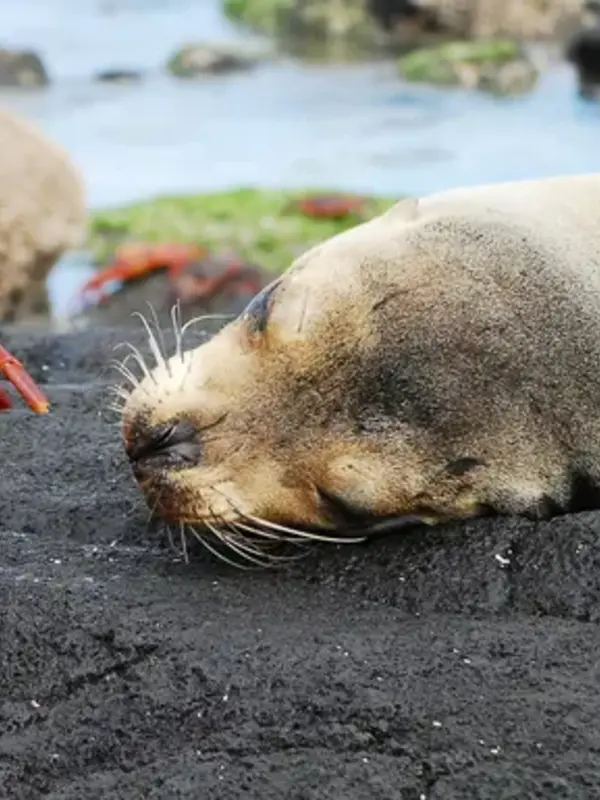
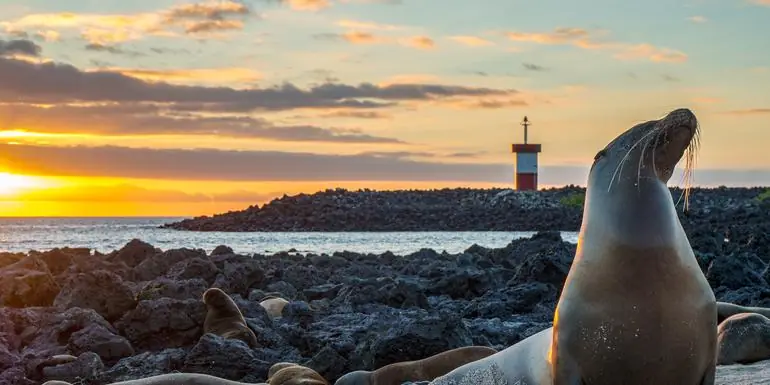
Once you visit these isolated Galápagos Islands that teem with an incredible diversity of marine and animal life, you'll understand what makes them so special. Embark on this eight-day sailing tour onboard the Reina Silvia Voyager, our custom-built catamaran, which offers comfortable accommodations always close by. While exploring the central and eastern Galápagos Islands, you'll witness the giant tortoises of Santa Cruz, spot marine life (including three types of boobies) on the volcanic landscapes of Punta Pitt, and hike along a saltwater lagoon on Rábida.
Travel Style
Marine
Service Level
Upgraded
Physical Grading
3 - Average
What's Included
Cruise the Galápagos Islands aboard the Reina Silvia Voyager (7 nts). All meals aboard the Reina Silvia Voyager. Certified Galápagos National Park Service Guide. Snorkelling at Gardner Bay, Sullivan Bay and Bartolomé. Possibility to snorkel or kayak at Santa Fé, Darwin Bay, Rábida and Chinese Hat. Hike to the Bartolomé Island viewpoint overlooking the famous Pinnacle Rock. Incredible wildlife encounters throughout. Highlands and wild tortoise excursion (Santa Cruz Island). Visit to the Charles Darwin Research Station (Santa Cruz Island). All landings and excursions. Onboard snorkelling equipment and wetsuits.
What are the main highlights of this trip?
See giant tortoises at the Charles Darwin Research Station, Go snorkelling in Santa Fé, Spot sea lion colonies at Cerro Dragon, Stroll on the white coral sand beaches of Darwin Bay, Hike to a saltwater lagoon on Rábida, Kayak alongside incredible marine life
What is the maximum and typical number of participants on this tour?
Max 16, Avg 12
What meals are included in this trip?
7 breakfasts, 7 lunches, 7 dinners
What are the modes of transportation on my trip?
Motorized catamaran (Reina Silvia Voyager), zodiac
Is there an extra cost for travelling solo?
We believe single travellers should not have to pay more to travel so our group trips are designed for shared accommodation and do not involve a single supplement. Single travellers joining group trips are paired in twin or multi-share accommodation with someone of the same sex for the duration of the trip. Some of our Independent trips are designed differently and single travellers on these itineraries must pay the single trip price.
Where will we stay during the trip?
Aboard the Reina Silvia Voyager in twin-share, double or single cabins (7 nts).
Itinerary
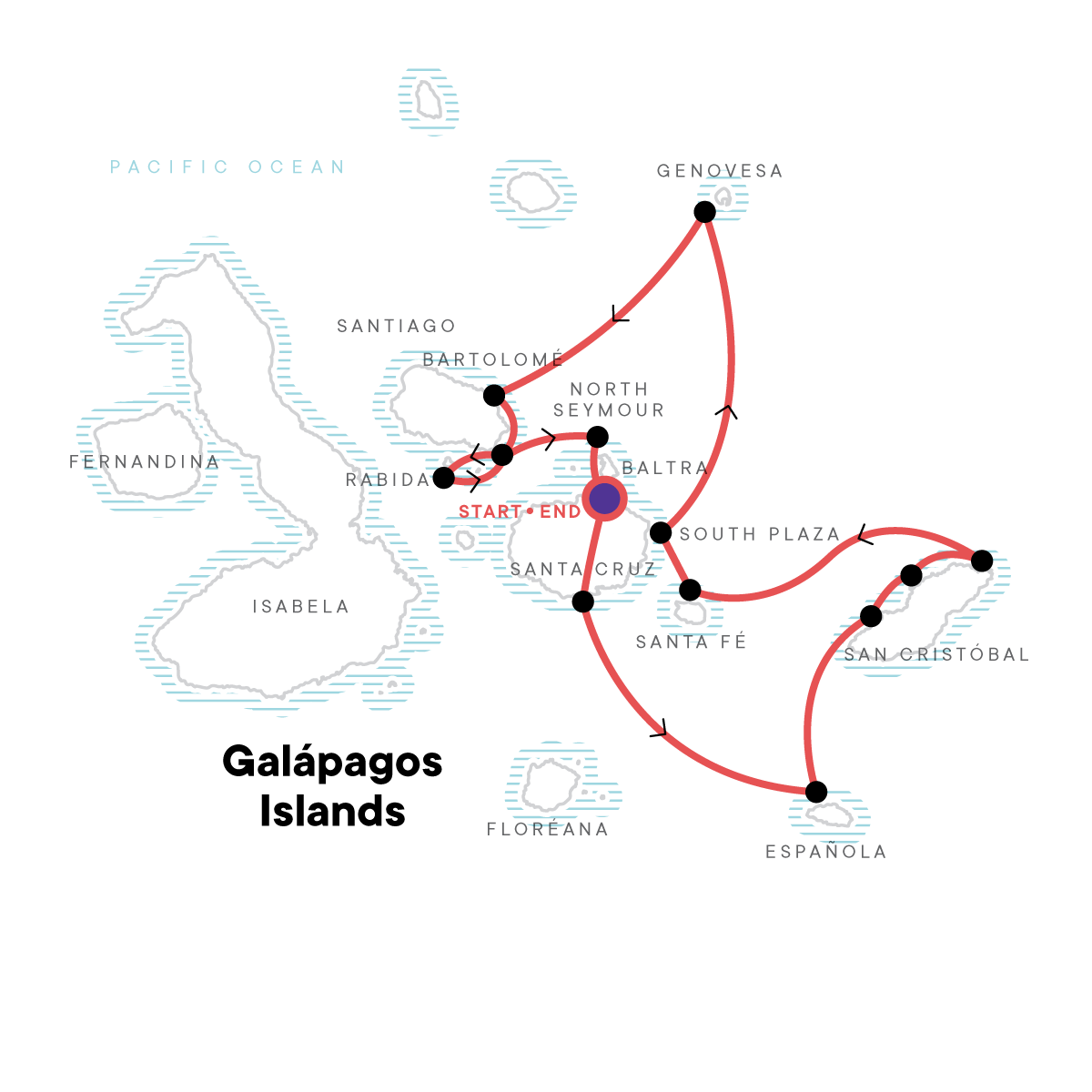
Baltra / Santa Cruz
Arrive to Baltra airport no later than 10:30am to arrive at the meeting point by 11:00am. Transfer to Santa Cruz Island with the CEO to visit the highlands before arriving to Puerto Ayora and a visit to the Charles Darwin Research Station. Board the boat in the late afternoon. After arrival in Baltra, visit the highlands of Santa Cruz Island for a special opportunity to view the islands’ most famous reptile: the giant tortoises in their wild habitat. What a privilege to see an endangered species roving in this lush environment! The vegetation of the area includes the Scalesia Forest (an endemic giant daisy tree) and birds such as the vermilion flycatcher will delight everyone with its scarlet feathers against an emerald green forest. Look for Darwin’s finches, particularly the famous Woodpecker Finch. We will then visit the Fausto Llerena Breeding Center and Charles Darwin Research Station to learn first hand of the conservation and research efforts in the islands. There, you’ll see several subspecies of adult tortoises, lots of hatchlings, and learn of the repatriation programs that are saving several subspecies of tortoises and iguanas from extinction.
Española: Gardner Bay / Punta Suárez
Enjoy the day on Española Island, one of the oldest in the archipelago. Visit the white sandy beach of Gardner Bay and the bird colonies of Punta Suárez. Take guided walks to observe wildlife and have free time for swimming or snorkelling. Spend part of the day visiting spectacular Gardner Bay. Walk across a lovely white sand beach amongst a busy sea lion colony and nesting sea turtles (seasonal). Later, take some time exploring the Punta Suárez visitor site, on the north-western corner of the island. Here, birds are everywhere—underfoot, on the trail, overhead, diving into the sea, taking off from cliffs, sitting quietly, and if the timing is right, engaging in ritual mating dances or hatching eggs. As the panga driver guides us in through the surf to the landing, sea lions are often seen “hanging 10” on the waves. A great tangle of marine iguanas, stretched out in the sun on the beach, are usually present when we arrive.
San Cristobal: Cerro Dragon / Punta Pitt
Land at Punta Pitt in the morning for a walk to observe the wildlife and spectacular scenery here. In the afternoon continue on to Cerro Dragon on San Cristóbal to observe sea lions and enjoy the beach before travelling to the dramatic Kicker Rock to see the steep vertical stone walls rising from the ocean. The beauty makes for memorable sunset views. Start the day walking along a trail on Punta Pitt that winds up through eroded volcanic tuff formations to a plateau where there's a spectacular view of the island, and Islote Pitt. Along the trail are endemic plants and wildlife unique to San Cristobal, such as the San Cristobal mockingbird and the San Cristobal lava lizard. All three boobies (blue-footed, red-footed and Nazca) are known to nest here, at Islote Pitt which is a small islet near the anchorage. Blue-footed boobies can often be seen plunge-diving for fish while frigate birds soar overhead.
In the afternoon, head to Cerro Dragon to visit the white sand beach there and observe Sea Lions. Finish the day, with a navigation around the spectacular Kicker Rock. This striking rock formation is located a couple hours off the western shore of San Cristobal. Jutting out of the water, the rocks stand vertically at hundreds of feet above the ocean divided by a small channel.
Santa Fe / South Plaza
Visit Santa Fé island for a chance to mingle with the iguanas. Continue to South Plaza for some great bird watching opportunities and views from the oceanside cliffs. Today, spend time visiting fascinating Santa Fé, home to a small population of very large land iguanas, and the largest of the Opuntia cacti. The lagoon is ideal for swimming and snorkeling; sea lions and colorful fish are in abundance here, as well as the occasional sea turtle. Later, visit South Plaza, a small, but very rewarding island to visit. Here you see an array of endemic land iguanas munching on Opuntia blossoms and leaves. On the upper edge, at the windward side, Swallow Tailed Gulls nest. Watch these beautiful birds maneuver in the tricky air currents as they set up to land on the cliff face. From the bluff you can see schools of Yellowtail Mullet, occasionally a shark, and lots of birds flying back and forth.
Genovesa: Darwin Bay / El Barranco
Visit Darwin Bay and marvel at the sheer number of birds along the many trails. Head to El Barranco in the afternoon to see the many types of boobies, including red-footed boobies. In the morning, visit the white-sand coral beach of Darwin Bay which winds through mangroves filled with land and marine birds. See Nazca boobies, red-footed boobies and swallow-tailed gulls, and further down the path, observe tidal pools where sea lions swim playfully. In the afternoon, visit El Barranco (also known as Prince Phillip’s Steps), which is a steep, rocky path that leads up to a high cliff-face. If you’re lucky, catch a glimpse of red-footed boobies, short-eared owls, Nazca Boobies, storm petrels, Galapagos swallows, and Galapagos doves, as you enjoy the magnificent views.
Santiago / Bartolomé
Visit Sullivan Bay on Santiago Island to witness the giant lava formations contrasting the white-coral-sand beach. Continue to Bartolomé for a guided walk to see the island's dramatic volcanic features and the iconic Pinnacle Rock. The morning visit heads to Sullivan Bay on Santiago Island, located on the southeast part of the island. This place is interesting for its geology because the area has elevations in form of small volcanoes, formed by the lava flows. Later, head to Bartolomé Island, home of the famous Pinnacle Rock. This is an exceptional place to observe volcanic island geology and to snorkel. Among the many colorful species you will see Bi-color Parrotfish, Streamer Hogfish, and Flag Cabrilla. Sometimes you get a special treat—a penguin “snorkeling” right around you in hunt of fishy treats. The long climb up the wooden steps to the pinnacle of this cinder cone takes you through cinders and rough volcanic formations, a veritable moonscape. The lower slopes are graced with a light sprinkling of the delicate, silvery Taquilia, a ground hugging plant adapted to this harsh spot. On top you will enjoy the spectacular view of Bartolomé, Santiago, and several other nearby islands.
Rábida / Chinese Hat
Spend the morning exploring the red sand beaches and salt water lagoons of this tiny island. Look for wading flamingos and nesting pelicans before heading out to do some snorkelling. In the afternoon, discover the lava flows and lava tunnels on the small island of Chinese Hat. After, enjoy a refreshing dip in turquoise waters. Search for fish and sea turtles in the protected bay. Rabida is a “small red island,” the colour of the volcanic cinders.The red beach is usually well populated with sea lions and pups. At times the low salt bushes are loaded with nesting California Brown Pelicans. Just behind the beach, in a brackish lagoon, see Bahamas White-cheeked Pintail Ducks, migratory shore and wading birds, and Greater Flamingos. Flamingos need the presence of a dozen or two other flamingos to stimulate their synchronous mating dance. If our timing is right, we will be able to observe this highly entertaining ritual as well as two species of boobies nest along the cliffs. Later, travel to Sombrero Chino, a tiny island just off the southeast tip of Santiago. Its name (Chinese Hat) describes the island’s shape. Though centrally located, it is one of the least visited sites in the area. Patches of pahoehoe lava, cracked lava and lava tubes can be found on the island. If you’re up for a walk, a path leads to some spectacular views of the waves crashing below. White-tipped sharks frequent the area, as do the playful Galapagos Penguins and sea lions.
Baltra
After breakfast, disembark from the Reina Silvia Boat. If your departure flight is at 11:30AM or later, then you are welcome to take the transfer to the airport with the group. If your flight is earlier, you will need to make your own arrangements to get to the airport.
What are the mandatory travel insurance requirements for this trip?
Travel Insurance: Travel insurance is compulsory in order to participate on any of our trips. When travelling on a group trip, you will not be permitted to join the group until evidence of travel insurance has been sighted by your CEO, who will take note of your insurance details. When selecting a travel insurance policy please bear in mind that all clients must have medical coverage and that we require a minimum coverage of USD 200,000 for repatriation and emergency rescue. We strongly recommend that the policy also covers personal liability, cancellation, curtailment and loss of luggage and personal effects. If you have credit card insurance we require proof of purchase of the trip (a receipt of credit card statement) with a credit card in your name. Contact your bank for details of their participating insurer, the level of coverage and emergency contact telephone number.
Terms, conditions and restrictions apply; pricing, availability, and other details subject to change and/ or apply to US or Canadian residents. Please confirm details and booking information with your travel advisor.